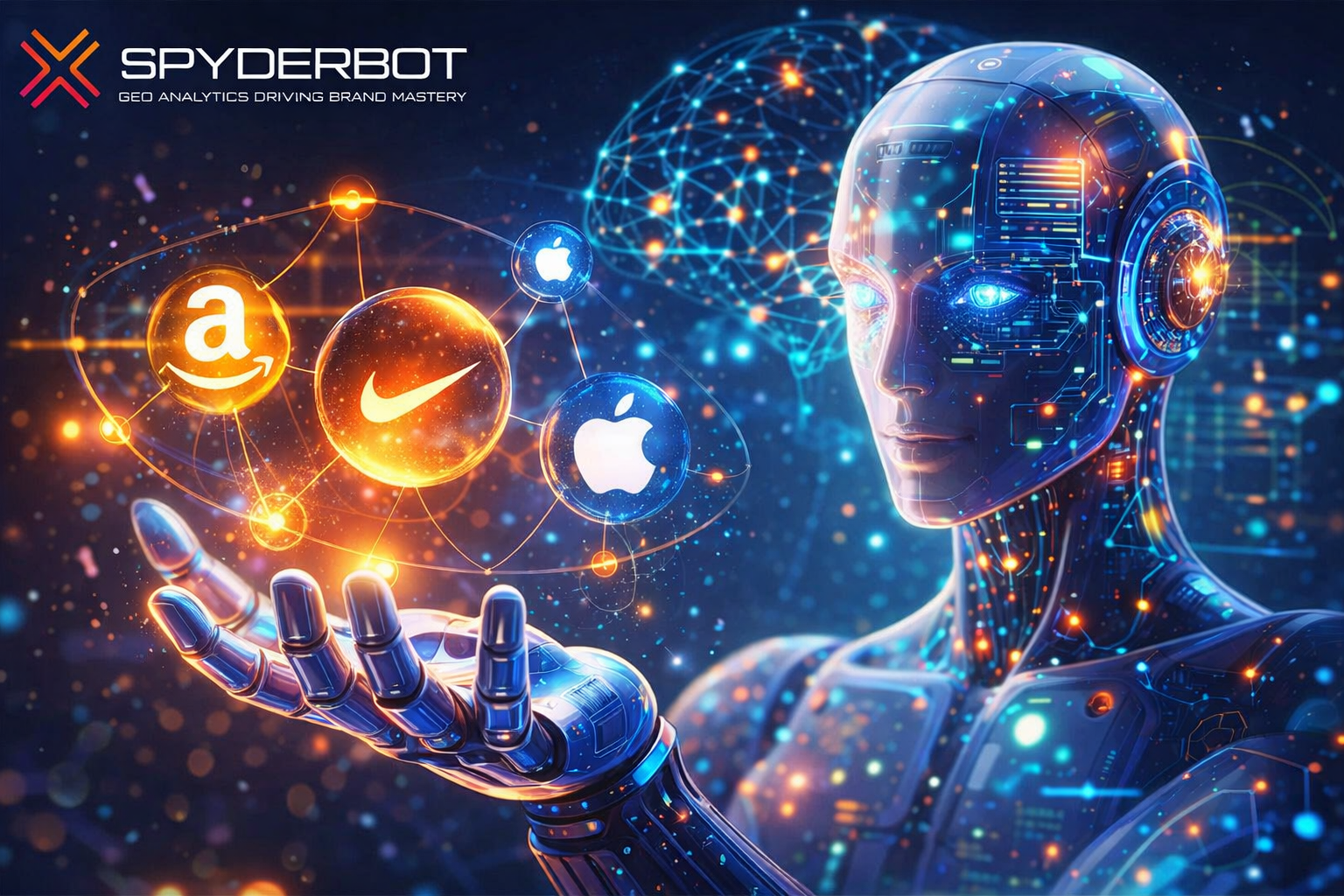
How AI systems understand, describe, and position your brand
What is brand representation in AI?
Brand representation in AI refers to:
How AI systems understand, interpret, and describe your brand when generating answers
It goes beyond mentions
It includes:
- Whether you are mentioned
- How you are described
- What category you belong to
- How you compare to competitors
- What role you play in a narrative
The key shift
AI does not just mention brands
It represents them
Why this matters
In traditional search:
- Users interpret brands themselves
In AI systems:
- AI interprets brands for the user
The new reality
AI is becoming the interpreter of your brand
The 4 layers of brand representation in AI
To understand how AI represents brands, we need to break it into 4 layers:
- Entity definition
- Category positioning
- Contextual role
- Narrative framing
1. Entity definition
“What is this brand?”
AI first determines:
- What your company is
- What product you offer
- What problem you solve
Example:
AI may define you as:
- “SEO tool”
- “AI analytics platform”
- “marketing software”
Key insight
If AI defines you incorrectly, everything else breaks
2. Category positioning
“Where does this brand belong?”
AI places your brand into:
- A category
- A competitive landscape
This determines:
- Who your competitors are
- Which queries you appear in
Key insight
Your category in AI determines your visibility
3. Contextual role
“When should this brand appear?”
AI decides:
- In which use cases you are relevant
- When to include or exclude you
Example:
- “Best tools”
- “Alternatives”
- “For beginners”
Key insight
Representation is context-dependent
4. Narrative framing
“How is this brand described?”
AI assigns a role:
- Leader
- Alternative
- Niche tool
- Budget option
This influences:
- Perception
- Trust
- Decision-making
Key insight
Framing shapes how users perceive your brand
The Brand Representation Model
Representation = Definition × Positioning × Context × Framing
Why representation matters more than mentions
You can be:
- Mentioned frequently
- But represented poorly
Example:
- Mentioned as “basic tool”
- Positioned as “alternative”
Result:
- Low influence
Key insight
Visibility without correct representation = lost opportunity
Common representation problems
1. Misclassification
- Wrong category
- Wrong competitors
2. Weak positioning
- Not clearly differentiated
- Blended with others
3. Limited context coverage
- Only appears in narrow scenarios
4. Poor framing
- Undervalued
- Misrepresented
Why AI representation is hard to control
Because AI learns from:
- Distributed data
- Multiple sources
- Patterns and associations
This means:
- No single source defines you
- Representation emerges from patterns
Key insight
Your brand in AI is an emergent property, not a controlled output
How different AI systems represent brands differently
ChatGPT
- Pattern-based
- Association-driven
Gemini
- Influenced by SEO and search
Claude
- Conservative and balanced
Grok
- Real-time and sentiment-driven
Perplexity
- Source and citation-driven
Key insight
Your brand does not have one representation — it has many
The gap companies don’t see
Most companies focus on:
- Content
- SEO
- Messaging
But ignore:
How AI actually interprets them
This creates a hidden risk
Your brand in AI may be different from your intended positioning
How to improve brand representation in AI
1. Strengthen entity clarity
- Clearly define your category
- Avoid ambiguity
- Use consistent language
2. Control category positioning
- Align with the right competitors
- Reinforce your niche
3. Expand context coverage
- Appear in multiple use cases
- Align with user intent
4. Shape narrative framing
- Influence how you are described
- Align messaging across sources
A realistic scenario
A company:
- Strong product
- Clear internal positioning
But in AI:
- Misclassified
- Compared with wrong competitors
- Positioned as secondary
Result:
- Low influence despite visibility
Where SpyderBot fits
SpyderBot helps analyze:
- How your brand is represented
- Where misalignment occurs
- How competitors are positioned
- How to improve representation
It answers:
- How AI defines your brand
- Where positioning breaks
- How to fix representation
The honest conclusion
Brand representation in AI is not:
- Static
- Controlled
- Deterministic
It is:
Dynamic, probabilistic, and emergent
Final insight
You don’t control how AI represents your brand
But you can:
Influence the signals that shape it
The shift
We are moving from:
- Brand messaging
To:
- AI-mediated brand perception